How to Use a GPU
gpi_pack uses PyTorch for its neural models. A GPU is not required: the statistical estimators, LLM workflow, Stable Diffusion extractor, and Cosmos extractor can all select CPU execution. In practice, generating representations with a large language, image, or video model is usually much faster on a compatible accelerator and may require more memory than a laptop provides.
The device rules depend on the interface:
TarNetand the image and video extractors select CUDA when it is available and otherwise use the CPU.Dynamic GPI with
device="auto"tries CUDA, then Apple MPS, then CPU.A Transformers language model uses the device selected when you load it.
Checking CUDA
An NVIDIA GPU uses CUDA. Check whether the installed PyTorch build can access one with:
import torch

print(torch.cuda.is_available())
if torch.cuda.is_available():
    print(torch.cuda.get_device_name(0))
If this prints False on a machine with an NVIDIA GPU, install a PyTorch
build compatible with the machine’s driver by following the PyTorch
installation selector. Installing
the CUDA toolkit alone does not change a CPU-only PyTorch installation.
Using a Hosted GPU
If you do not have a local GPU, you can use a hosted notebook such as Google Colab or a cloud service such as Amazon SageMaker. Colab offers optional GPU runtimes, but the available hardware and usage limits can change.
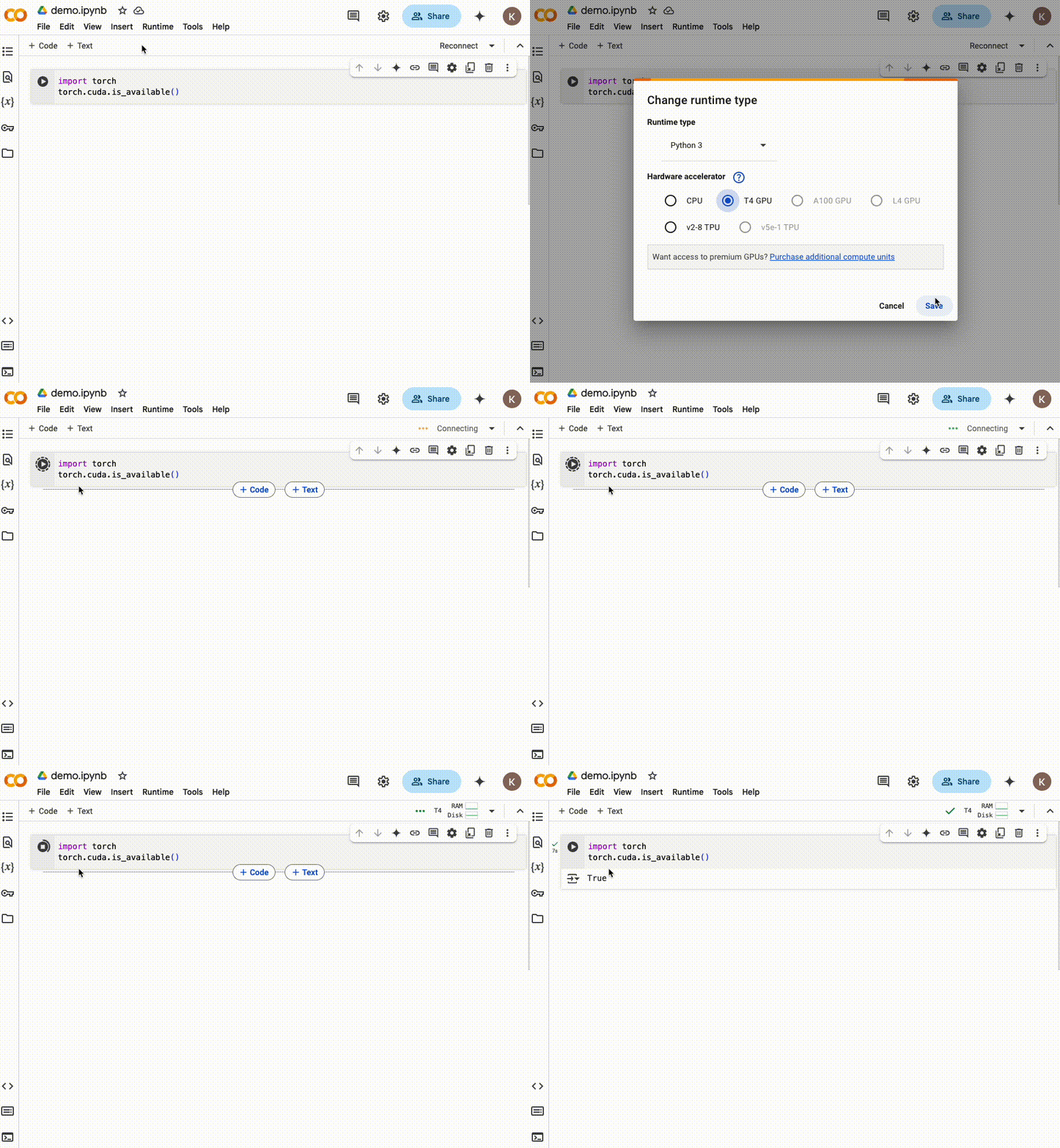
To use a Colab GPU:
Create a notebook and select Runtime > Change runtime type.
Select a GPU hardware accelerator and reconnect the runtime.
Run
torch.cuda.is_available()in the notebook to verify that PyTorch can see the device.Install gpi_pack from PyPI. For example, include both video and tuning dependencies with:
!python -m pip install --upgrade "gpi-pack[video,tune]"
If your data are in Google Drive, mount it separately:
from google.colab import drive

drive.mount("/content/drive")
Using Remote Model Execution
A local GPU is not the only option for LLM representations. The NNsight guide explains how to run a supported open-weight model on the remote NDIF service and download only the values explicitly saved by the trace.